
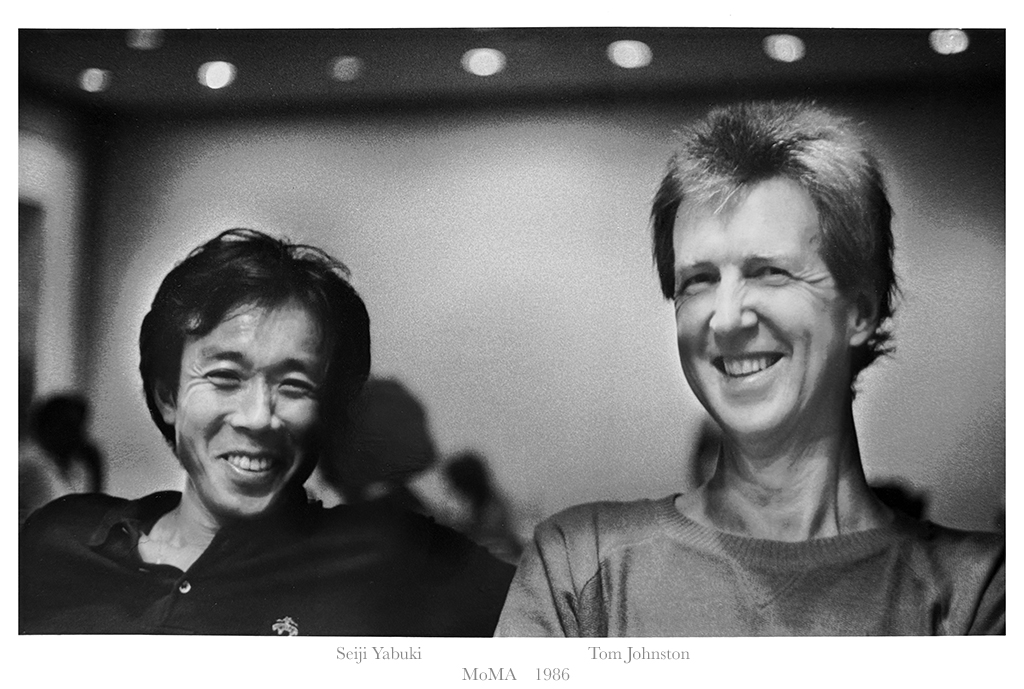
In the previous post I wrote about how Seiji and I met when we were working at Atelier 17 in 1980.
In the summer of 1982, Annie and I returned to Paris so that I could continue working at the atelier in Montmartre. Seiji arranged a sublet for us at Le Bateau Lavoir, walking distance to Atelier Lacourière-Frélaut, where I had made Metro the previous summer. In earlier blog posts I have written about working at this highly regarded printmaking atelier, the art I made there, and some of the artists I met.
In following years Seiji would visit us when his travels took him to the west coast, where he would see friends, attend some of Wagner’s Ring Cycle, visit his sister in the Bay Area, and then fly on to Tokyo to be with his family. It was always a pleasure to introduce Seiji to our friends and socialize in Bellingham and Seattle. Some of our friends would see him on their visits to Paris. It reflected his generosity of spirit, making new friends and showing them the city he loved.
Seiji could appear shy at first meeting, quiet, introspective, reserved. Jim Stroud told me of a memorable visit when Seiji came to see him at his loft in SoHo after Jim had returned from Paris, before he went to Yale for grad school. During the visit, at an impromptu party, Seiji regaled Jim and his studio mates with stories and improvisations at the piano.
During summer 1986, Annie was doing a graduate assistantship with Lowery Sims at the Metropolitan Museum of Art, and Seiji visited while we were living in NYC. We had a small apartment on the upper east side within walking distance of the museum. During Seiji’s visit we went to shows, galleries and museums, walked around the city, cameras in hand, explored the city at night, and found restaurants by aroma. Richard Serra’s Tilted Arc was still in place and walking around it late at night was a memorable experience.
In 1988, a friend of Seiji’s had left Paris to be with the “love of her life” in Tahiti, so her apartment on rue Traversière, in the 12th arrondisement, was available. It was a small studio apartment in a newer building, with a grand soaking bath. There was a wonderful late-night cafe from La Reunion in the neighborhood. Seiji was always welcome and loved to luxuriate, soaking in the grand bath and dreaming. That winter we welcomed Joni and Douglas, close friends from Bellingham, when they passed through on their travels to warmer climes. Red wine, fresh oysters, and fine chocolate remain in our memories of that great visit. Another memorable event was going to a party in the offices of Variety Magazine on the Champs-Élysées. A childhood friend of Douglas’ was working there. Social events like this always result in lively discussions and meeting interesting people. One memorable Frenchman was researching the post-1917 revolution and was investigating a lead that descendants of Lenin might be living in the 14th arrondissement.
I mention this as an aside about the richness of this city, and a placeholder that surfaces later, related to that research. The city’s diversity and creativity in all forms leads to many remarkable experiences that often overlap by chance. For the moment I will continue with some of the shared experiences with Seiji.
During the mid 1980s, the Bastille neighborhood was going through gentrification as the artisan furniture-building ateliers were moving out of central Paris. The new Opera House was nearing completion; young artists, new galleries, and alternative spaces were transforming the neighborhood; restaurants were changing as well. We experienced several in the area, with our favorite for an espresso or dejeuner being Café Pause, and our favorite for people-watching being La Rotonde Bastille. One time we were meeting at La Rotonde to give the keys of the rue Traversière apartment to the next person who was moving there; he was a photographer, and pointing to the bar on the corner, he told us it was the nightly meeting place of the student organizers of the Mai 1968 uprising. The neighborhood was still rich with nightlife, especially with the Balajo a short walk to rue de Lappe.
Seiji had recently purchased a two-level space and was transforming it into a live/workspace. Passage l’Homme was through a large wooden door on rue de Charonne that was open during the day for deliveries to workshops and galleries on the ground level and closed at night to ensure the privacy of residents.
Annie and I witnessed his creativity at work as he designed his dream loft. We observed his inventive decision making as his ideas took shape, reviewed sketches now and then. Seiji focused for a long time on one of the loft’s major design elements, a curvilinear shape to be cut out of the existing structure between the two levels. During the process he installed skylights, much to the consternation of neighbors as he didn’t follow the strict zoning ordinances. He eventually had to go before the zoning commission, and the skylights were allowed to remain. Soon after, Seiji had a baby grand piano installed in the upper loft beneath one of the skylights. We enjoyed listening to his improvisations; and he shared how he loved playing late at night, getting lost in his imagination, and being surprised that he was often still at the keyboard as the sun was rising.
While he was designing and overseeing the renovation of the loft, Seiji was still living in the 15tharrondissement, in a building at 6, rue Armand Moisant. Possibly the same building where Wilfredo Lam had lived and worked decades earlier. One cold January day we had planned to have lunch at the close by Le Camboge, and when we arrived at his atelier, he said he was feeling a “little off.” I noticed that his fingertips looked unusually dark. I asked if it was just the cold, dark days of winter. He then told me he had been working in the cave, or basement storage area, and he was trying to salvage some of his antique pastels that had been flooded. I immediately suspected that some of the pigments he was trying to salvage may contain toxic ingredients, since they were produced before there was labelling of ingredients. I shared these concerns with Seiji, and later, after visits with his doctor, he confided that my intervention had probably saved his life.
I was aware of the growing concern in recent years about the health and safety of the artist’s workspace, the tools and materials artists use, and the importance of knowing what ingredients one may encounter. As art students, we were at the end of an era when one could buy buckets of lead white, paint with your hands and lungs unprotected, and use any number of solvents in unventilated workspaces. The first years I began working in studios abroad, I was very aware of the health and safety conditions lacking in some studios. The second year I brought a silicone facemask and appropriate filters with me. I was quite a sight and I felt somewhat self-conscious, and I was teased as le Martien. I always remember one of the printers boasting that they wash all the contaminants out of their system with vodka. By my third year many had invested in their own safety masks.
After Seiji moved to his loft in the Bastille I was able to use the rue Armand Moisant studio for the summer. That year, 1988, was an especially productive time in my art making. We had lived in the small apartment in the 12th for the winter; then we moved to an artist loft in the Fondation des Etats Unis for the springtime, and when a friend, Marianne, returned to the U.S. we were able to move to her space, the best atelier in the building. That was the year Bill Hayter passed away, and Désirée invited us to stay at their home in the beautiful Art Deco building on rue Cassini, while she was in Ireland that summer. It was also the year she introduced us to Madame Longuet at the annual summer party at Atelier 17 on rue Didot. Désirée said we should visit Christine as she was a very interesting person, lived a few doors away and had a beautiful garden. It was rumored that Balzac had lived in her building when he lived on rue Cassini.
We became close friends and shared stories, meals, and spent summer evenings drinking wine in her beautiful garden. Later we would travel with her in Germany and the southwest of France. In all these places, we were introduced to her friends. She would come to the studio and observe my paintings as they progressed.
Following up on my earlier reference to the French journalist searching for potential relatives of Lenin in the 14th– one special evening in Christine’s garden, she emerged from her “cave” with a cellared bottle of wine and some glasses for special occasions. During the toast, she said, “and you know, (long pause), Lenin drank from these glasses.” Christine was a widow, having been married to Robert-Jean Longuet, the great-grandson of Karl Marx. At the time I wasn’t thinking of the journalist I met earlier that year because we had lost touch.
One afternoon Christine said she wanted to introduce us to two of her close, younger friends who were passionate about art. Since that summer of 1988 we have shared a close friendship with Jean-Claude and Albrecht. This long-lasting friendship has evolved over these decades to become a family shared closeness, with visits in various locations in France, North America, and Morocco. They are consummate hosts, and creative in all ways; from ideas for recipes and wines through preparation and presentation, their meals and gatherings were always beautiful and delicious. There were memorable dinners at their apartment in the 10th and later when they moved to their larger apartment in the 18th the dinners became more elaborate, with more guests coming together for spirited conversations.
During all these years Seiji has been an integral part of a group of longtime friends. Annie and I always enjoyed the times the three of us shared, spontaneous meals at his studios, numerous cafes, usually close by his studios; late night walks through the streets, scavenging materials for his collages, taking pictures, and exploring the ever-changing neighborhoods.
Seiji was an avid collector with a wide range of interests: printed materials, mass media, magazines, costume jewelry, cinema posters, classical and jazz albums. He also had a discerning eye and knew when he discovered a quality item, as when he bought an exquisite antique necklace for his mother. Another time he recounted finding an original photograph of Nijinsky, having discovered it just moments ahead of a person he referred to as a real collector. Another area of Seiji’s collecting was multi-layered posters as they were peeled and scraped from the walls of the metro. Record albums seemed to fulfill a particularly strong desire, combining his love of jazz and appreciation for the graphic design of album covers. All these materials found their way to Seiji’s lofts.
In addition to his lively imagination, he had a wry sense of humor. In the floorboards of the loft he fashioned a hidden vault; on occasion he’d ask if we’d like to see his treasures, which consisted of costume jewelry, which he would proudly display with a twinkle in his eyes.
One thing I enjoy is matchmaking of talents; as an example, I occasionally tried to convince Seiji to work in a professional etching studio in hopes of establishing a working relationship that could lead to more exposure for his art. In the end I think he preferred to have his personal touch in his art production, as opposed to the exacting standards associated with professionally printed editions. He visited me at the etching studio in Montmartre on occasion.
The closest I came to realizing this potential was introducing him to the book artist and master printmaker Marion Mudde. In 1988-89 she printed a small edition, a drypoint, for him, an extremely delicate drawing of the face of a young woman.
In 1993 Annie and I had an invitation to visit friends and colleagues, Jesse and Louise, who were living in Tokyo. We were able to coordinate this visit with Seiji also being there, so we introduced them.
We introduced Seiji to another friend, Alan Hulse, who had been living in Tokyo for several years. In the later years Alan and his wife Mami Nagase were able to get information to Seiji when it was difficult to reach him by telephone. Alan visited Seiji at his apartment in Meguro Ward near the station, and another time at a café: “Seiji-san was hospitable and entertained me for about two hours: café & cookies… I remember that Seiji-san showed me some pictures that he had taken in Bellingham and noted that some had been taken in your old place…”
How fortunate we were to visit another magnificent city and to have friends who shared their love of the place and people with us. Highlights of this experience were introducing friends and sharing meals (again, Seiji is a master in the improvisational kitchen). Louise is also a master of cuisine, and we have had the pleasure of dining at her table, first in Bellingham, then those days in Tokyo, and many times since, after Jesse and Louise returned to Seattle.
A highlight of this visit was meeting Seiji’s parents and sisters at their family home, where the four of us – me, Annie, Jesse, Louise – were warmly welcomed. For Annie and me, it was our first experience with a Japanese family in their traditionally styled home. They were very gracious and cultured, and their home was comfortable as well as aesthetically inviting, with inspiring artworks and furnishings. Louise is a sumi-e artist, and felt honored and excited to be handed an original scroll by an artist she greatly admired, Uragami Gyokudo, an 18th century painter and musician.
Seiji visited us in the Pacific northwest again. As part of this journey, he rented a car and drove to Los Angeles, primarily to explore the west coast and take photographs along his journey on Highway 1. Some of these photographs were featured in an exhibition in the Marais, 5 Japanese Photographers living in Paris. We were able to see this handsome exhibition with Seiji.
During our later visits to Paris, 1995-2008, we continued our old habits of walking the streets, day and night, cameras loaded, visiting friends and old haunts, favorite cafes, bistros, and restaurants.
During those later years Seiji told me he was growing homesick and was starting to spend more time in his hometown and really growing to appreciate Tokyo. We would talk on the telephone every few months; if he didn’t answer his Paris phone it usually meant he was in Tokyo, and vice versa. In addition to our many telephone calls, we shared a regular correspondence from the beginning of our friendship. These letters highlight his poetic use of language and rich sense of storytelling.
He was always very close with his family, and I suspect he wanted to spend more time with his parents in their final years. In one of our calls after the March 2011 earthquake and tsunami, he told me he had spent some time in the hospital.
Seiji passed away in 2017 at too young an age. He lived the life of a romantic, an artist, connoisseur, collector, world traveler, and creator, working in a variety of disciplines all with a destiny of beauty.
Thank you to longtime friends who shared remembrances of times with Seiji: Joni Papp & Douglas Drake, Alan Hulse & Mami Nagase, Bonnie Lyons, Doug van Dyk. Jim Stroud for recounting visits with Seiji in NYC and Paris. Jesse Hiroaka and Louise Kikuchi memories of meeting in Tokyo. Albrecht Jerruntrup & Jean-Claude de Maria.
A special affection for his loving sisters Kazuko, Keiko, and Setsuko, who generously shared their love of their brother.
-
- Loft under construction 1988
-
- Seiji at work
-
- Atelier Passage l’Homme
-
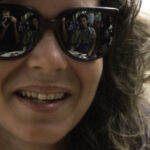
- We Three
-
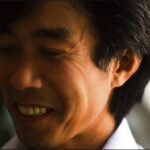
- Summer 1989 Paris
-

- Upper Loft – Passage l’Homme
-
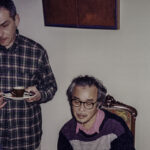
- Chez Albrecht et Jean-Claude
-
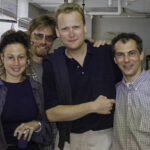
- Joni, Douglas, Albrecht, Jean-Claude- Printmaking Studio, Bellingham
-
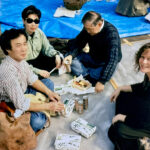
- Cherry Blossoms, Ueno Park with Seiji, Louise, Jesse, Annie
-
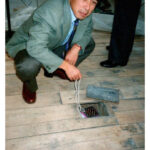
- The Vault
-
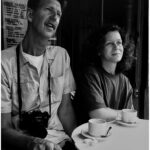
- Seiji snaps Tom et Annie with his M2
-
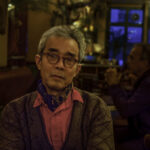
- December 13, 2008


Thanks, Tom! I enjoyed reading about all your intersections with Seiji and others, on three continents! And the photos are wonderful, as well! Bob
Lovely tribute to your dear friend filled with wistful memories. Thank you of sharing them. I especially love the beautiful photo of you and Annie.