
Early years 1966-1981
Among the multiple facets of Seiji, he was known to many for his kindness and pursuit of beauty, in all its forms. Simply put, he was a dreamer, a poet, author, painter, printmaker, photographer, illustrator, connoisseur, chef, and collector. He traveled the world in search of beauty. His travels took him to distant places on this planet. His early travels took him to all parts of the globe to see friends and to discover new adventures. He spoke of his early days in France, initially on a student visa, and working in a restaurant in La Rochelle for a brief time in the mid-1960s.
From the Scandinavian countries to Greece, North American cities from east to west, and remote beaches on Vancouver Island. Many of his travels were in pursuit of his love of music and in particular opera. From Vancouver, Seattle, San Francisco, to Los Angeles, visiting friends, attending opera, seeing one of his sisters, Kazuko, in the Bay Area. It was common for him to arrange his travel to experience a specific production or singer. In Paris he would sometimes disappear for a few days, leaving friends to wonder if he had returned to Tokyo to see his family, only to return to Paris with stories about having taken the overnight train to Italy, Germany, or Austria because he had a chance to hear someone he was following, even if it was a gamble that a ticket would be available. Because of the closeness to him and his family, he divided his time between Tokyo and Paris.
On one of his early visits to Paris, he was walking by a bookstore in Saint Germain when he saw his book, I Love the Morning, prominently displayed in the window. He told me that it was such an exciting moment for him that he decided that he would live in this city. His first apartment was on rue Jacob in that neighborhood.
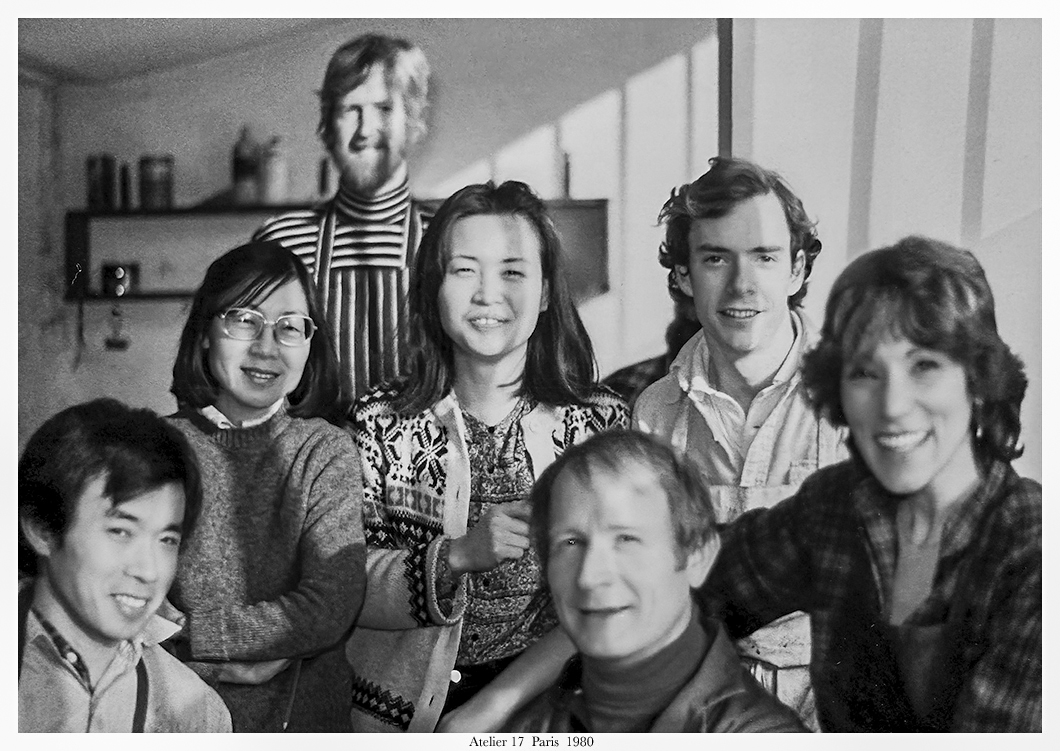
We met in 1980 at Stanley William Hayter’s Atelier 17. One day in early October we were sharing a worktable, both vigorously scraping our etching plates. Sometimes one gets into a rhythm as the scraper cuts into the metal, altering the surface to erase and transform the image on the plate. At a certain point we both realized we were scraping in time with each other, in rhythm; we exchanged glances and went back to the scraping activity. We later realized that we were both using the same vintage rangefinder cameras.
During break-times, we would sometimes go to the café next door, Madame Paulette’s, for an espresso or déjeuner. It was an exciting time, breaking bread with artists who had come to work at the atelier from various parts of the world. Some had come to live in Paris and were well established, some wanted to learn from the master; and a few had left their countries because of living and political conditions. Those attending the morning sessions in the fall of 1980 included several who became friends outside of the studio, sharing dinners, mixing cuisines from various countries, and exploring cinema and nightlife in the 14th. Jim Stroud, Edgar Martinez, Haakon Thorsland, Ingrid Ousland, Jacques Privat, Satoko Myodo, Clara Mazzini, Meg Buchanan, Ingrid Pierre Louis, Victoria Johnson, Judy Barie, Tsutomu Tanibata, and Gerard from Laos.
Always inquisitive, Seiji told me he had taken a printmaking class at a community center but wanted a greater challenge. Shortly after that he signed up to work at Atelier 17, Stanley Williams Hayter’s experimental workshop that was known for its ground breaking approach to experimentation and an intuitive approach to art making. After a certain point les nouveux would have individual meetings or critique with Bill, to review works in progress. Seiji and I compared notes about what he said: Seiji, with a twinkle in his eye, said…”you know what he told me? Black is your best color.” Seiji enjoyed the conversation. We were thereafter referred to as les anciens.
The first time we planned to do something outside of the studio was to see an exhibition at a gallery on Isle St. Louis. Annie and I were looking at the exhibition, waiting for Seiji to arrive. We knew Paris was a large city and there could be any number of reasons to delay or arrive late. After about 15 minutes his friend came into the gallery and told us Seiji would arrive in a few minutes as he was looking for a parking spot. Within a few minutes he arrived and introduced us to Mariko, and we all started looking at the exhibition. After about 10 minutes, we heard a commotion outside, all the drivers in the cars on the street were honking their horns, and as if awakening from a dream, Seiji remembered that he had not found a parking place, and because of the traffic jam he just came into the gallery. When the honking horns reached him, he suddenly remembered that he had left his car in the middle of the one lane street, now continuing the traffic jam, behind his VW, which had then become the source of the traffic jam. We all rushed out of the gallery and drove away.
After that Seiji would invite us to his studio near Tour Montparnasse. One evening he suggested doing a slide show as he had a projector. Another couple was there, a French photographer, I later learned that he had worked for Cartier-Bresson at one point. We spent New Year’s Eve at Seiji’s loft, celebrating the beginning of a lifelong friendship, and we made simultaneous portraits to welcome the new year.We shared some great dining experiences, whether it was something he would invent, or restaurants, simple bistros, and cafes. One place close to his atelier when he lived in Montparnasse was Le Camboge, a place always busy, whether morning or late at night. It was a family business; the mother managed the kitchen, while brother and sister attended to the dining room and customers. The father appeared to be the observer, making sure all was in order. The ambiance was noteworthy, bustling with activity, steamy windows during winter months and sidewalk tables during spring and summer nights; someone typing away on a manuscript with jazz playing on the sound system. Seiji speculated that the family had been living in exile for many years. I don’t recall ever seeing a name on a menu or on the facade, but Le Camboge is how Seiji always referred to the place, so that is the name we knew it as.
As this friendship evolved over the decades there were many visits in NYC, Seattle, and Tokyo, and of course whenever we were in Paris. In the next post I will share some of those experiences.
Seiji Yabuki, 20 March 1942 – 14th February 2017 Tokyo, Japan. Graduated from Keio Daigaku. He moved to France in 1966 I Love the Morning was published in 1970 by The World Publishing Company, New York. In 1970, he worked as an editor, illustrator, and designer for An An Japan, Elle Japon where he had his own creative page. He conceived a calendar published by The World Culture Corporation, Sakanisha & Kamishima et une histoire.
-
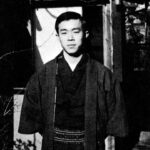
- Seiji Yabuki c. 1963
-

- Seiji’s book cover
-
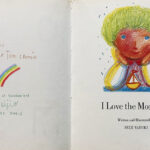
- The Prince of Rainbow land
-
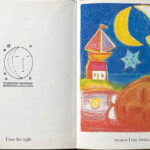
- because I can dream
-
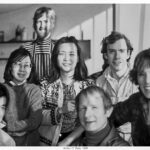
- Atelier 17 courtesy Jim Stroud
-
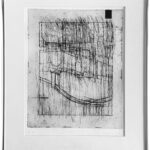
- Etching, 1981, Paris, 12” x 9 1/2”
-
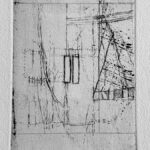
- Etching, 1981, Paris, 6” x 4″


Such a beautiful story, remembrance, and brought to life here Tom. Thank you for sharing it.
David